

Hey there! As a supplier of cut - loop printed carpets, I often get asked about the sound absorption coefficient of these carpets. So, I thought I'd dive deep into this topic and share what I know with you all.
First off, let's understand what the sound absorption coefficient is. Simply put, it's a measure of how well a material can absorb sound. The coefficient ranges from 0 to 1. A value of 0 means the material reflects all the sound that hits it, while a value of 1 means it absorbs all the sound. For cut - loop printed carpets, the sound absorption coefficient can vary depending on several factors.
One of the main factors is the carpet's thickness. Thicker cut - loop printed carpets generally have a higher sound absorption coefficient. This is because the extra layers of fibers provide more obstacles for sound waves to travel through. When sound waves hit the carpet, they get trapped within the fibers and are converted into heat energy, which is a form of absorption.
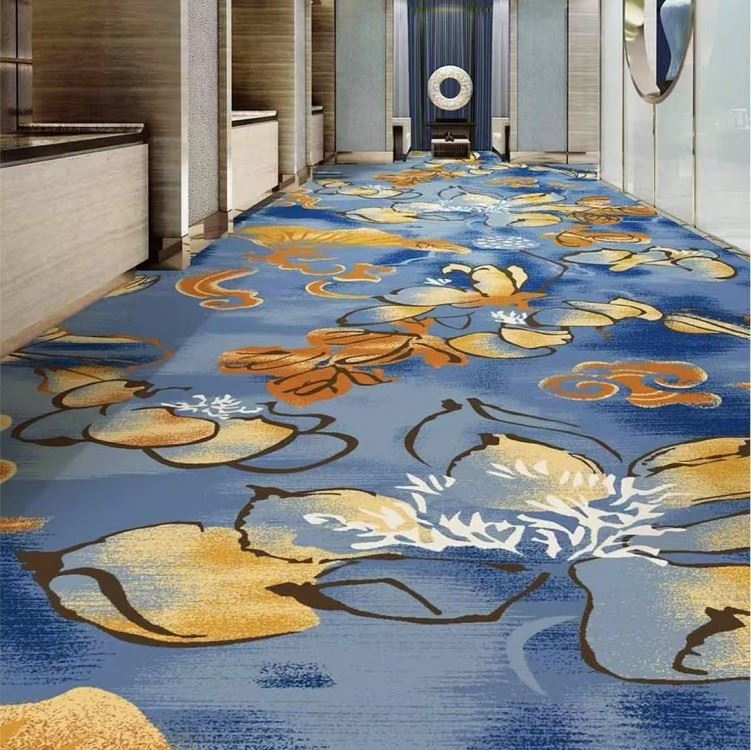
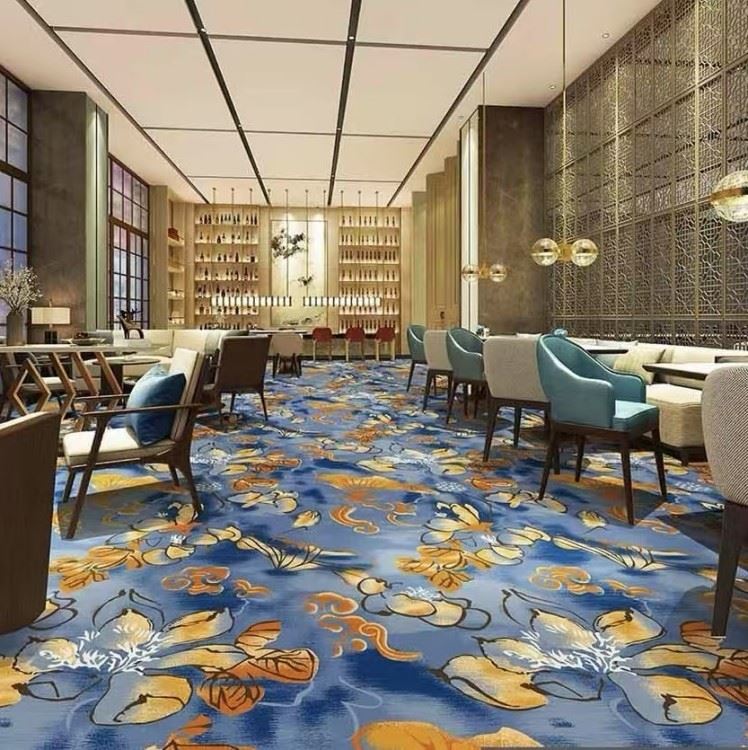
Another factor is the density of the carpet. A denser carpet has more fibers packed closely together. This means there are more surfaces for the sound waves to interact with. As a result, more sound is absorbed. For example, our Cloud Pattern Geographic Printed Carpet is designed with a relatively high density, which helps in better sound absorption.
The type of fibers used in the carpet also plays a crucial role. Some fibers are better at absorbing sound than others. For instance, wool fibers have natural sound - absorbing properties. They are porous and can trap sound waves effectively. On the other hand, synthetic fibers like nylon can also be engineered to have good sound absorption characteristics. Our Gorgeous Blue And Gold Printed Carpet uses a blend of high - quality synthetic and natural fibers, which gives it a decent sound absorption coefficient.
The backing of the carpet is another aspect to consider. A thick and dense backing can enhance the sound absorption of the carpet. It acts as an additional barrier for sound waves, preventing them from passing through to the floor below. Some of our carpets come with a special sound - absorbing backing that further improves their performance.
Now, let's talk about how we measure the sound absorption coefficient of our cut - loop printed carpets. We use a standardized test method called the reverberation room method. In this method, the carpet is placed in a reverberation room, which is a room designed to have a long reverberation time. Sound is then emitted into the room, and the decay of the sound is measured. By comparing the decay time with and without the carpet, we can calculate the sound absorption coefficient.
On average, our cut - loop printed carpets have a sound absorption coefficient ranging from 0.3 to 0.7. This means they can absorb a significant amount of sound, making them a great choice for spaces where noise reduction is important. For example, in offices, classrooms, and hotels, these carpets can help create a more peaceful and comfortable environment.
Let's take a look at some real - world applications. In an office setting, the constant chatter, the noise from printers and other equipment can be quite distracting. By installing our Blue - gray Geometric Printed Carpet, the sound absorption properties can reduce the overall noise level. This leads to a more productive work environment as employees can focus better without being disturbed by excessive noise.
In a hotel room, a carpet with good sound absorption can enhance the guest experience. Guests want a quiet and relaxing place to stay, and our carpets can help achieve that. They can block out the noise from the hallway, other rooms, and the outside, providing a peaceful retreat for the guests.
When it comes to choosing the right cut - loop printed carpet for your sound absorption needs, it's important to consider your specific requirements. If you're looking for maximum sound absorption, you might want to opt for a thicker, denser carpet with a high - quality backing. However, if you also have budget constraints, you can still find a carpet that offers a good balance between sound absorption and cost.
We understand that every customer is unique, and we're here to help you find the perfect carpet for your needs. Whether you're a business owner looking to improve the acoustics of your space or a homeowner wanting a quieter living environment, our cut - loop printed carpets are a great option.
If you're interested in learning more about our products or want to discuss your specific requirements, don't hesitate to reach out. We'd love to have a chat with you and see how we can assist you in finding the right cut - loop printed carpet for your project. You can start the conversation by getting in touch with us, and we'll guide you through the selection process.
In conclusion, the sound absorption coefficient of our cut - loop printed carpets is influenced by various factors such as thickness, density, fiber type, and backing. With an average coefficient ranging from 0.3 to 0.7, these carpets can significantly reduce noise levels in different settings. So, if you're in the market for a carpet that not only looks great but also helps in sound absorption, give our products a try.
References
- ASTM C423 - 17, Standard Test Method for Sound Absorption and Sound Absorption Coefficients by the Reverberation Room Method.
- Textile Research Journal, various articles on fiber properties and sound absorption.