Carpet Industry Knowledge: Decoding the Manufacturing Process of Tufted Broadloom Carpet

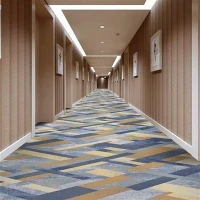
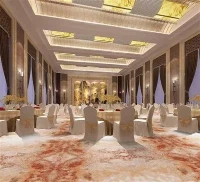
In commercial spaces (such as office buildings, hotels, shopping malls) and some residences, the soft flooring material under our feet is most likely "tufted broadloom carpet." It is one of the most widely used carpet categories on the market today, highly favored for its high production efficiency, wide adaptability for patterns, and relatively controllable cost.
I.Core Process Analysis: The Tufted Broadloom Carpet Production Line
The production of tufted broadloom carpet is a continuous, highly automated process, which can be divided into four main stages: preparation, tufting, backing consolidation, and finishing.
Stage 1: Preparation – Yarn Readiness
Raw Material Yarn & Creeling:
Raw Materials: The "pile" or "face" of the carpet consists mainly of synthetic fibers such as Nylon (wear-resistant, easy to dye), Polypropylene (Olefin, moisture-resistant, inexpensive), Polyester (good color fastness), and Wool (high-end, natural, comfortable).
Creeling: This involves mounting yarn cones onto the creel of the tufting machine, preparing for the tufting process. This step ensures a continuous supply of yarn during production.
Stage 2: Tufting – Giving the Carpet Life and Pattern
Threading & Yarn Guidance:
Yarn is drawn from the creel, passed through a series of guides and tension controllers, and finally threaded through the "needles" of the tufting machine. This is a critical step to ensure smooth startup of the tufting process.
Tufting Process:
This is the core of the entire production. The tufting machine operates like a giant sewing machine, equipped with hundreds or even thousands of needles threaded with yarn. These needles rapidly punch the yarn into a primary backing fabric (usually polypropylene woven cloth) to form loops.
Pattern Formation:
By controlling the penetration of each needle and the yarn color via computer programs, a variety of patterns and textures can be created, including cut pile, loop pile (where loops remain intact), or combinations of high and low loops for rich, three-dimensional designs and colors.
Stage 3: Backing Consolidation – Making the Carpet Durable
Back Coating (Latexing):
The freshly tufted carpet has yarns only hooked into the primary backing and is not secure. A layer of latex (typically SBR latex) is applied to the back.
Compound Feeding : This is the prerequisite step for back coating. Latex, fillers (such as calcium carbonate, used to add weight and reduce cost), and other raw materials are fed and mixed according to a specific formula.
Secondary Backing Application:
Before the latex dries, a secondary backing (usually a polypropylene mesh or non-woven fabric) is applied. This backing enhances the carpet's dimensional stability, tear resistance, and overall toughness.
Drying & Cooling:
The carpet passes through a long drying oven where hot air cures the latex, firmly bonding the pile yarns, primary backing, and secondary backing together.
It then goes through a cooling zone to bring the temperature down to ambient levels, completing the setting process before moving to the next stage.
Stage 4: Finishing – The Final Product and Packaging
Rolling:
An automatic winding machine rolls the cooled and set carpet into rolls of uniform specification, facilitating storage, transportation, and subsequent installation.
Packaging & Warehousing:
The carpet rolls are given protective packaging (e.g., plastic film), labeled with specifications, batch numbers, etc., and finally sent to the finished goods warehouse awaiting shipment.
II. Industry Knowledge Extension
1.What is "Broadloom" Carpet?
"Broadloom" refers to carpet produced in continuous rolls. During installation, it can be cut to fit room dimensions and secured with adhesive or tack strips, allowing for seamless coverage ideal for large areas. It contrasts with "carpet tiles" or "modular carpet" (small, square, often movable sections).
2.Advantages of Tufted Carpet:
High Production Efficiency: Tufting machines operate at very high speeds, resulting in large output volumes.
Design Versatility: Computer control allows for highly flexible pattern changes, meeting customisation demands.
Cost-Effectiveness: Production costs are lower compared to hand-knotted or Wilton woven carpets.
3.Key Quality Factors in the Carpet Industry:
Pile Height and Pile Weight: Affect the carpet's thickness, underfoot feel, and durability.
Gauge and Stitch Rate: Determine the density of the tufts; higher density generally means a more robust carpet.
Backing Quality: Directly relates to the carpet's dimensional stability and service life.