As an important part of interior decoration, the molding process of home carpets has always been the focus of consumers and the industry. With the continuous advancement of material science and textile technology, the molding process of carpets is also constantly innovating to meet people's diversified needs for beauty, comfort and durability.
The traditional carpet molding process mainly relies on hand weaving and tufting technology. Hand-woven carpets are famous for their fine patterns and unique feel, but the production cycle is long and the cost is high. Tufting technology forms the carpet pile surface by planting fiber clusters on the base cloth. This method has high production efficiency and is suitable for large-scale production. The pile density and length of tufted carpets can be adjusted according to design requirements to achieve different decorative effects.
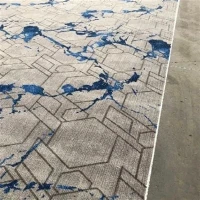
With the development of science and technology, new molding processes are gradually emerging. Hot melt adhesive bonding technology uses hot melt adhesive to bond the fiber mesh to the base cloth to form a carpet backing. This method not only improves production efficiency, but also enhances the durability and stability of the carpet. In addition, the introduction of digital printing technology makes the pattern design of carpets more diverse and the colors richer, meeting consumers' needs for personalization and customization.
In addition to technological innovation, environmental protection and sustainability have also become important development directions for carpet molding technology. More and more carpet manufacturers have begun to adopt environmentally friendly materials and energy-saving production processes to reduce the impact on the environment. For example, the use of recyclable materials and low-energy printing technology not only reduces production costs, but also enhances the market competitiveness of products.
The molding process of home carpets continues to develop in the integration of traditional and modern technologies, which not only improves production efficiency and product quality, but also promotes the green transformation of the entire industry. In the future, with the continuous emergence of new materials and new technologies, home carpets will show a more diversified and personalized development trend.